22 Sep 2026
Cairo, Egypt
Sustainable Construction

If you look out over Cairo, you’ll see a skyline crammed with buildings. The intricate spires of mosques mingle with square-shaped apartments and modern skyscrapers. What you won’t see in this arid, ancient landscape, are trees. Cairo has been suffering from a pollution plague for years. It’s known as the black cloud, hazy, dense smoke that first began hovering over this major metropolis in 1997. Now, it’s responsible for 42% of the country’s air pollution.

Haze hangs around the magnificent Pyramids. Soot clings to the sides of buildings. Many people suffer from asthma, and the rates of respiratory problems have skyrocketed.

One of the people who’s fallen victim to Cairo’s abysmal air quality is Mohamed Abdel Samad, who’s had allergies all his life, and recently, recovered from an inflammation in his lung.

“Everyone smokes inside buildings, and it’s a horrible thing. When you go outside you smell burning diesel and fumes. Cairo is really polluted and I wanted to do something about it,” he said. “So, I decided to plant trees.”

An idea is born:

Abdel Samad grew up in Cairo, then, left the country to get his bachelor’s in business at the Hogeschool-Universiteit Brussel. But it was his interaction with the people when he studied at the BI Norwegian School of Management, where he developed a true passion for the environment.

“Scandinavians are very eco-aware,” noted Abdel Samad. “In Norway, they’ve already met their carbon emissions goals. They are advanced when it comes to sustainable development, and there was a lot of information about sustainable companies and global citizenship.”

While in Norway, he decided he wanted to do something for pollution-strangled Egypt.

“The main reason I started this project is that I wanted to do something for my carbon footprint, so I said, okay, I’m going to plant trees. Trees are amazing, they are a carbon sink.”

Carbon sinks remove CO2 emissions from the atmosphere, and Abdel Samad thought that was just the ticket for Cairo.

Shagara At School:

In Japan, finding solace among trees is known as “forest bathing”, which is shown to improve immunity and mood. Researchers have found Vitamin N, or vitamin nature, essential to human health.

Dr. Robert Zarr, a pediatrician who started Park RX America, notes that mindfulness in nature plays a vital role in preventing chronic diseases like high blood pressure, diabetes, and depression.

But nature isn’t easy to come by in Cairo. The ficus sycomorus—which once grew in abundance all over ancient Egypt and whose fruit was buried alongside Pharaohs—can now barely be found.

“We planted about 70 of them along the street in a rural area, but people cut them down,” said Abdel Samad. “They are afraid the trees will grow too big.”

Instead, Abdel Samad decided to plant at schools, which is how Shagara at School began. Shagara means “tree” in Arabic.

“Most landscape designers in Egypt use non-native, invasive species,” he said. “My aim is to plant indigenous trees around schools and on school playgrounds, with gardens on the rooftops. Native species are best. You water them for a couple of months and then they take care of themselves.”

Growing Impact and Partnerships

Partnering with public institutions, diplomatic missions, and private sector leaders—including support from the Swedish Business Community, the Embassy of Sweden, and IKEA—Shagara expanded its vision to alleviate school overcrowding while promoting urban biodiversity and climate resilience.

In December 2019, Shagara inaugurated its landmark Green Roof Classroom in Qanater (Qalyubia Governorate). Built with the hands-on involvement of students, teachers, and laborers, the engineered soil and vegetation transformed spaces to improve building waterproofing, mental and physical health, and learning environments. Over the years, this pioneering milestone has served hundreds of students, celebrating its sixth anniversary with figures such as Qalyubia Governor H.E. Engineer Ayman Attia and Swedish Ambassador H.E. Dag Juhlin-Dannfelt.

Similarly, Shagara teamed up with Tawasol Egypt, an NGO in Ezbet Khairallah providing free education to school dropouts and empowering local women. Together, they transformed an underutilized rooftop into a dual-purpose Intensive Green Roof + Solar Panel array:

  1. Biosolar Synergy: The green roof naturally cools the ambient temperature around the solar panels, increasing energy generation efficiency, while the panels provide varied microclimates for diverse plant species.

  2. Social & Educational ROI: The roof serves as a safe outdoor classroom and recreational space, improving student mental well-being and providing vocational and green architecture training opportunities.

  3. Urban Heat Mitigation: Continuous insulation and transpiration significantly reduce the building’s cooling loads in the heart of Cairo.

Bigger Dreams for Shagara

There are hundreds of schools spread across Cairo, and Abdel Samad continues to expand Shagara’s reach, proving that ecological design paired with genuine social purpose creates lasting, multi-generational impact.

“Even when there’s a tree in one place, it makes a difference in the microclimate,” said Abdel Samad. “If you see a tree in Cairo, everyone is sitting and standing underneath, so that one tree does make a difference.”

Follow Shagara at School on Facebook, Instagram, and Linkedin

Images: Courtesy of Shagara at School.

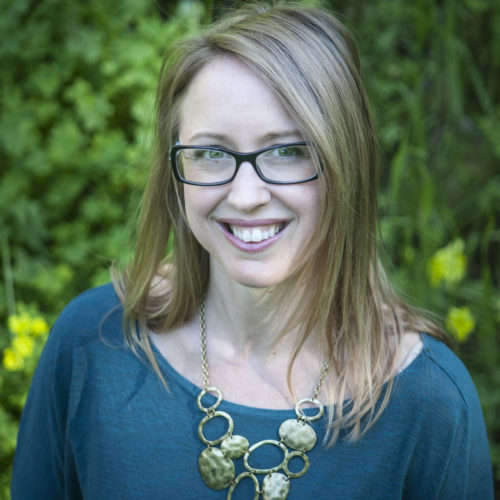
Kristin Hanes is a journalist who has a passion for the environment, sustainability and science. She loves telling stories about people who are making a real difference in the world.Kristin Hanes
One man’s mission of building native trees turns educational | The Switchers
Shagara at School Sustainable housing and construction